Iris
The CageIris is Linda Briggs’s friend and an important companion during the disappearance of Linda’s twin daughters, Terri and Berri Briggs. She helps make the search visible beyond the family’s home, then stays physically close to Linda as uncertainty gives way to confirmation that both girls are dead. Her role is not that of an investigator: she supports the family, helps sustain a neighbourhood appeal, and shares the grief that follows the identification of the twins.
Identity and Place in the Story
Iris enters the narrative through her connection with Linda. The evidence presents their friendship in acts of practical care and mutual presence rather than through background about Iris’s own life. When a woman brings a box of campaign shirts to Linda’s house, Iris thanks her and explains that neighbours and the twins’ friends have contributed towards making them. The shirts carry a photograph of the girls together, drawn from the image released when they were first reported missing, and the missing-persons hotline number. Iris’s part in this exchange places her within a wider circle of people trying to keep the twins in public view.
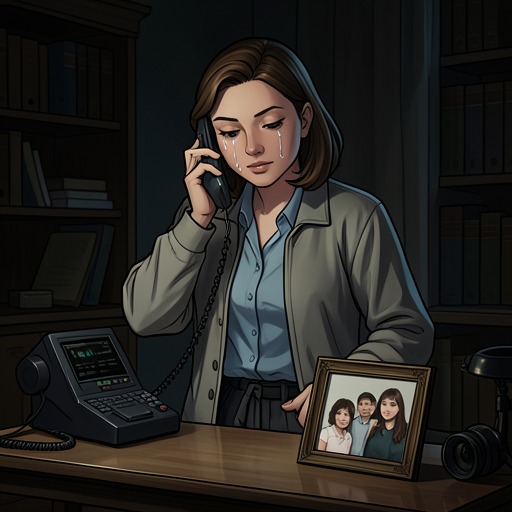
That work continues beyond the initial delivery. After Wendy Sawyer tells Linda that the police have found the smartphone the girls were using and are waiting to question someone, Iris holds Linda’s hand. The two women are wearing the shirts, and they have spent a long time taking them to neighbours and updating people on what they know. Their activity is concrete and sustained: the appeal is not simply an image displayed in the home but something carried from house to house, paired with information as the investigation changes.
Making the Missing Girls Visible
The shirts give Iris a direct means to answer a problem the story places around the search: attention is unevenly distributed. Linda argues that the twins have received less notice because they are poor and working class, while the disappearance of people seen as wealthier or more socially favoured attracts greater media interest. She points to the extensive coverage of the Phantom’s victims and imagines that the twins might have been treated differently if their family appeared more affluent. Iris’s campaign takes up this concern through a repeated, public image of Terri and Berri and a clear request for information.
Iris makes the comparison explicit when she proposes sending a shirt to a media figure, so that the twins might receive the same prominence as the Phantom and his victims. The gesture links the household appeal to the news coverage that has made the serial case prominent, but it also challenges the hierarchy of whose disappearance merits attention. The shirt turns the twins’ own photograph into a portable appeal: neighbours can wear it, pass it on, and see the girls’ faces alongside the hotline details. Iris does not claim that the campaign will solve the case; its immediate purpose is to increase recognition and keep the girls from being forgotten amid other headlines.
This effort follows a damaging public portrayal of the family. A front-page article speculates about what happened to the twins and includes a photograph of Linda outside a visibly untidy home. Iris is not identified as present when Linda and the police discuss that coverage, so the article cannot be treated as a scene she witnesses. It nevertheless clarifies the social context of the shirt campaign: the appeal insists on the twins as particular missing people, rather than allowing speculation or class-based judgments about their family to define them.
Beside Linda as the Search Turns
When the investigation reaches a more serious turn, Iris is with Linda at home. Wendy Sawyer reports that the twins’ phone has been found and that police are preparing to question someone. The women’s shared handclasp and matching shirts make their support visible before the news has been resolved. Later, when Gary Baxter and Jane Bowman arrive, Linda and Iris sit watching the television with its sound turned low. Both women are wearing the shirts, and their expressions register the weight of the visit before Gary has explained the developments.
After Linda understands that the police have found both girls, Iris responds by putting an arm around her and crying. This is a moment of shared distress, not an account of what happened to the twins: Gary says that he does not yet know what was done to them. Iris’s reaction accompanies Linda’s first reception of the news and marks the abrupt collapse of the hope sustained by the search. The campaign shirts remain on the women, but their meaning has changed. They had carried a promise that the girls might come home; now the same faces accompany the family into bereavement.
Identification and Aftermath
On 5 March, Iris accompanies Linda and Wendy to Sunderland Royal Hospital, where they are taken to the mortuary. The viewing is limited to confirming the identities of the two bodies before the forensic post-mortem is complete. Linda recognizes her daughters as Theresa and Bernadette Briggs, the formal names associated with Terri and Berri, and asks to see them properly and give them a last cuddle later. Iris is beside her at the moment of confirmation. The two women cling to one another and sob.
The scene completes Iris’s presence through the search: she has helped carry the twins’ faces into the neighbourhood, remained with Linda during the uncertain investigation, and accompanied her when hope becomes loss. Wendy Sawyer turns away, finding the work almost unbearable, while Iris’s physical closeness gives Linda immediate companionship in a room where no appeal or update can alter the outcome. The narrative does not provide Iris’s private reflections or later circumstances; it defines her significance through these acts of solidarity.
Narrative Role
Iris connects intimate grief with collective action. The shirts depend on contributions from neighbours and friends, and their distribution makes the search a shared undertaking rather than a task left to Linda alone. At the same time, Iris’s presence at the phone update, the police visit, and the mortuary prevents that public effort from replacing the personal cost of the disappearance. She is a supporting character whose importance lies in continuity: she stays beside Linda as the twins move from missing persons, to the subject of a community appeal, to formally identified victims.